
Brown County Property Tax Records
Two offices hold the tax picture in Brown County. The Appraiser maintains the valuation roll, while the Treasurer handles bills, payments, delinquencies, protests, and tax sales. Match both records by parcel number and tax year. Keep in mind that no tax record or payment receipt proves title.
| Field | What It Shows | Where |
|---|---|---|
| Appraised value | County estimate before the assessment rate | Appraiser |
| Assessed value | Appraised value multiplied by the class rate | Appraiser |
| Tax year | The assessment and billing period | Appraiser and Treasurer |
| Tax bill & status | Amount billed, paid, or delinquent | Treasurer |
| Special assessment | A public improvement charge on the roll | Clerk and Treasurer |
Kansas turns appraised value into assessed value using a classification rate. The mill levy is then applied to that assessed figure. Residential property is assessed at 11.5 percent. Commercial and industrial parcels use 25 percent. Vacant lots use 12 percent, and agricultural land uses 30 percent of economic-use value. Classification follows actual use on January 1. A mixed parcel may carry more than one class.
Look Up Brown County Tax Bills
Start with the Appraiser's parcel identifier. Then open the Kansas Property Tax Payment portal. Choose Brown County, and continue with the tax-statement process. The state route is built for payment, not a full public bill-card search. Need a copy, receipt, or delinquency status? Contact the Brown County Treasurer with the parcel number and tax year.
- Locate the parcel key through the Brown County Appraiser.
- Select Brown County in the state payment portal and use the current statement information.
- Ask the Treasurer for the bill, receipt, or delinquency status by parcel and year.
- Keep any sale notice separate from the later court and deed record.
- Assessed value
- The appraised value after the classification percentage.
- Mill levy
- The tax rate applied per one thousand dollars of assessed value.
- Tax lien
- A government claim tied to unpaid property tax.
- Special assessment
- A charge placed on the roll for a public improvement or local action.
Brown County Tax Calendar
The Brown County Treasurer usually mails bills between November 6 and November 14. The first half is due December 20. The second half comes due May 10 of the next year. The county sends no separate second-half notice. Interest starts running after a deadline passes. Keep the tax year, parcel identifier, amount, due date, and payment date together on paper. A November statement, a May installment, and a later delinquency entry can all describe one obligation's stages. Call the Treasurer at 785-742-2051 for the current bill or receipt. Don't infer status from a stale copy. The Brown County property-tax page carries the county's own calendar and payment details.
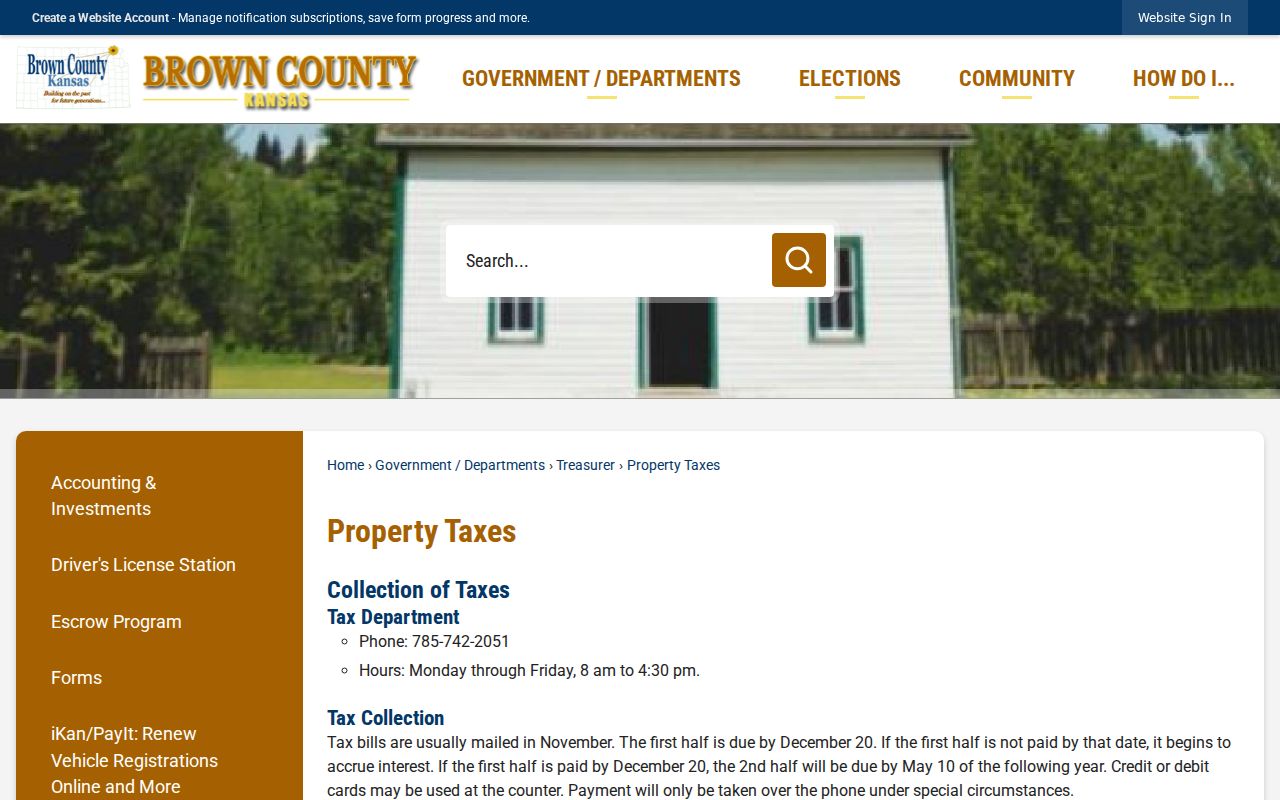
For deadlines that matter locally, the county's own tax page fills in what the statewide payment screen leaves out.
Pay Brown County Property Tax
The state payment route asks for a county selection and a current tax statement. Brown County lists e-check and major cards as accepted methods. A two-dollar processing fee applies per bill. Card payments also carry a card fee. Anything above $3,499 must be paid by e-check. Verify current charges at checkout. The Kansas Property Tax Payment portal is the statewide entry point for Brown County payments.
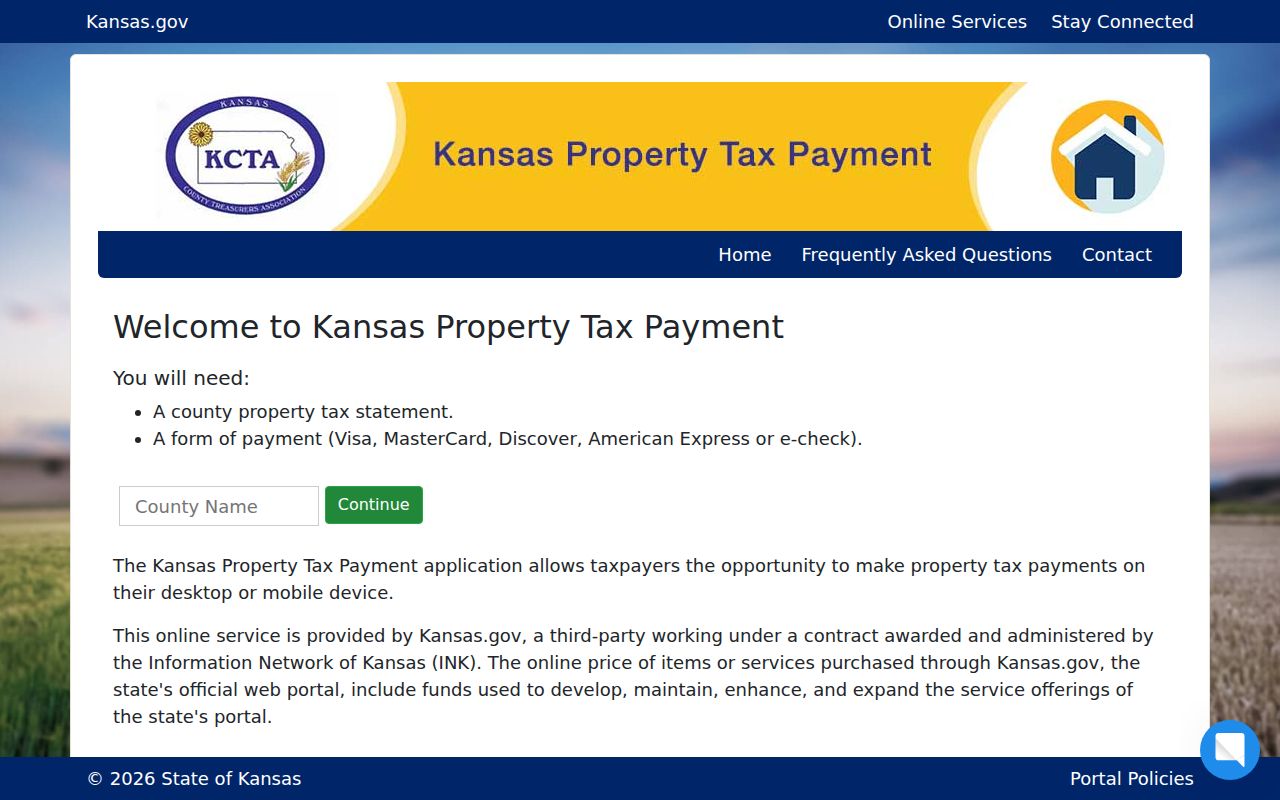
The portal processes payment from statement information. It does not replace a request for a public bill or receipt from the Treasurer.
Brown County Delinquent Tax Path
Land three years delinquent in Brown County may qualify for tax foreclosure. It may then go to public auction after due process, per the county. The Treasurer offers installment plans and attempts a sale annually. Delinquent taxpayers may not bid. Spring 2026 sale materials show how the evidence chain works. Each entry can carry a tract number. It can also carry an owner or taxpayer name as printed, legal description, redemption costs, and sale notice. The county warns that the list available on sale day controls over any earlier list. A notice is not a deed. Check redemption, court judgment, sale status, and any later recorded conveyance each on its own.
Stage matters. Three years delinquent can create eligibility, but notice, foreclosure, auction, confirmation, and deed are distinct Brown County records.
Brown County Tax Record Handoff
Brown County describes a records pipeline. The Register of Deeds passes ownership information to the Appraiser. Assessment and ownership data then move to the Clerk and Treasurer for annual statements. That handoff is not always instant. A deed and a tax bill can sometimes disagree. Compare the deed recording date, any known Appraiser update date, and the tax-roll year side by side.
The County Clerk handles special assessments on the tax roll. Ask the Clerk what resolution or public improvement sits behind a special line. Then ask the Treasurer about payment or delinquency. The Register remains the source for the instrument conveying title.
The Brown County Appraiser page links the valuation office and its public parcel search.
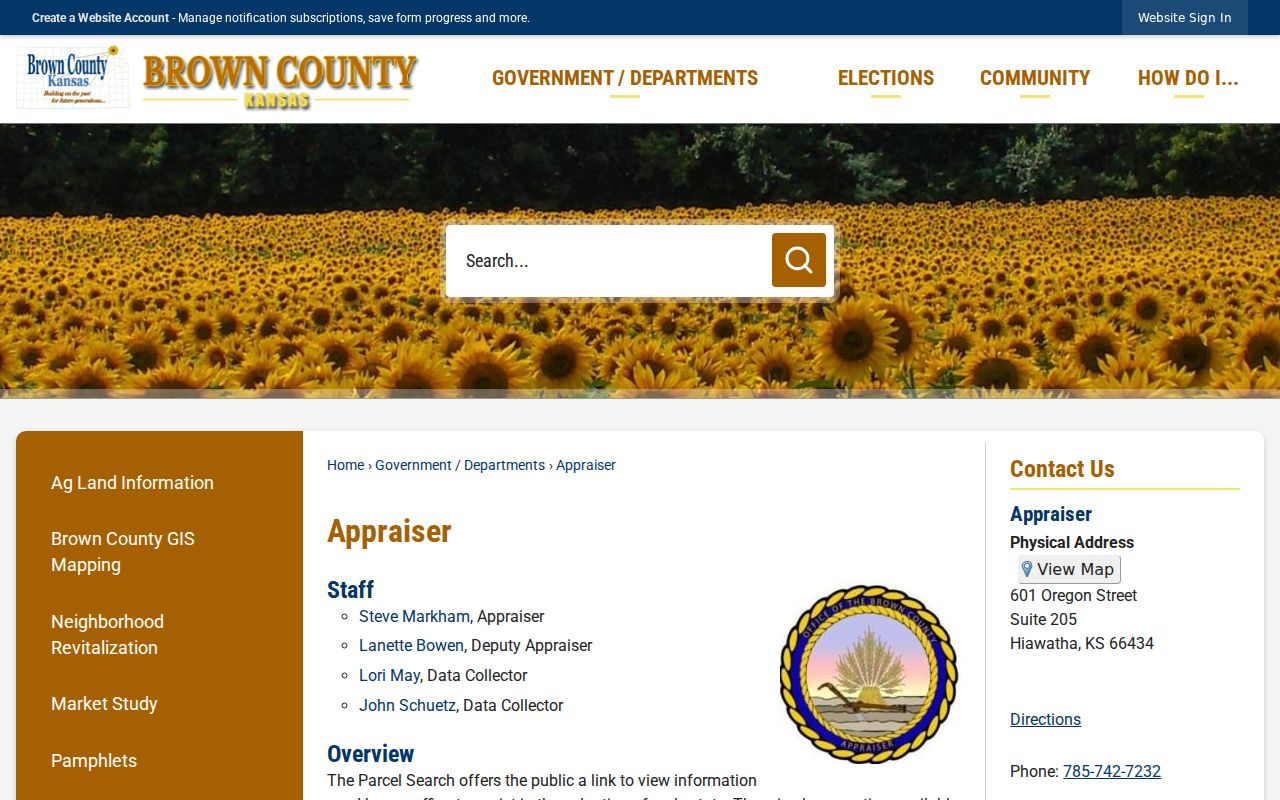
When the linked parcel card does not load, the office can confirm public assessment fields. It can also verify the current value record.
Calculate Brown County Assessed Value
Kansas multiplies appraised value by the classification rate to get assessed value. The assessed value is then multiplied by the mill levy. It is divided by 1,000 to produce the tax. That formula is why appraised value, assessed value, and the final bill are not interchangeable numbers. Residential property is assessed at 11.5 percent of appraised value. Commercial and industrial property uses 25 percent. Vacant lots use 12 percent. Agricultural land uses 30 percent of economic-use value. Confirm the parcel's actual January 1 use and classification before relying on any figure. Mixed use may produce more than one class. Brown County publishes no recent countywide revaluation year in its public materials. Rely on the current January 1 valuation cycle. Rely on the Notice of Value instead of an assumed reappraisal date.
Appeal Brown County Assessments
Kansas counties mail Notices of Value around March 1. From the notice date, an owner has 30 days to appeal. The first step is usually an informal meeting. There, an appraisal, comparable sales, photographs, contracts, and notes on condition all strengthen the case. One caution applies here. A sale price by itself does not fix the assessed value. The appraisal date and whether the sale was arm's length both count.
Appeal window. File within 30 days of the Brown County Notice of Value and confirm the exact deadline printed on that notice.
Under Kansas guidance, the informal meeting should happen by May 15. Final determination follows by May 20, and values are certified June 1. A third-party appraisal can be submitted within 60 days under the state procedure KDOR describes. Check the route and dates printed on the actual notice. Corrections can shift the ordinary calendar.
Document a Brown County Tax Appeal
A strong appeal file ties every document to the parcel and the valuation date. Keep the Notice of Value, parcel number, property class, photographs, repair estimates, and the sale contract. Include any independent appraisal as well. Comparable sales must be comparable in location, use, size, and condition. Explain the correction you want. A stack of unlabeled papers persuades no one.
An appraisal question is not a title question. A recent deed can leave the owner of record wrong. Take the recorded instrument to the Appraiser. If the land class or condition is off, support that valuation issue with facts. A missing tax payment belongs at the Treasurer's counter with the receipt. Route each issue to its custodian. That keeps one office's records from standing in for the whole file.
Kansas also offers small-claims and Court of Tax Appeals routes. Those come after the first county review. Track mailing dates, meeting notes, decisions, and deadlines in order. A missed deadline can narrow what remedies remain.
Request Brown County Tax Records
When the online route falls short, ask the Treasurer directly. Request an existing tax bill, receipt, payment status, or delinquency record by parcel and year. The Appraiser handles assessment entries and classification. The Clerk holds the resolution or roll entry behind a special assessment. Precise requests cut staff research time and prevent false matches.
Brown County's Open Records Request form is the written fallback. It asks for the requester's contact information, a description of the record, and intended use. It also wants a delivery choice and a signature. The form lists local copy and staff-time charges. Kansas agencies do not have to create new records or answer research questions. Name identifiable existing documents. Request a cost estimate first.
A response may redact exempt content while releasing the rest. Kansas guidance generally requires a response within three business days. That response may simply state when the record will be produced. If access is denied, ask for the written legal basis. For a plain explanation of the numbers, visit the Brown County property value page. It separates appraised, assessed, and sale values.